
ERP Solutions in UAE: A Complete Guide for Businesses
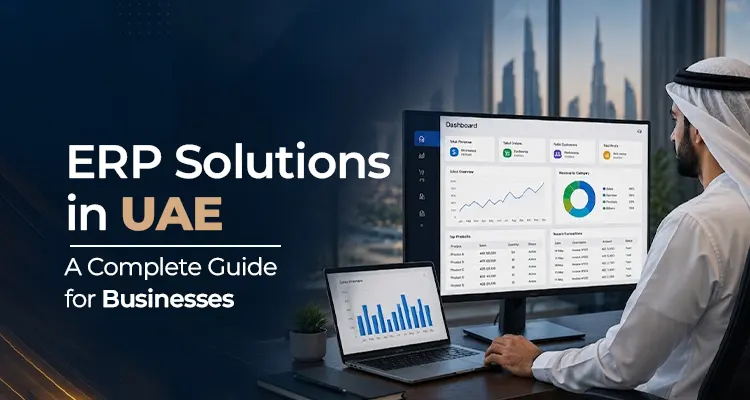
Businesses across UAE are growing fast, but they lack a system that keeps the operations connected. Still in 2026, several organisations in UAE struggle with disconnected tools, delayed reports, and misaligned teams. Adopting an ERP system in UAE can bring all operations together into one unified platform.
ERP (Enterprise Resource Planning) is a centralized software solution that connects main business functions like finance, HR, sales, and inventory into one organized system. The ERP solution is the stepping stone for your business to stay accurate, competitive, and future-ready.
Benefits of Using ERP Systems for Your Business in UAE
Implementing an efficient ERP system for Dubai businesses will help you upgrade from primitive business management to innovative and organised business management. Here are the advantages of using ERP systems for your business in UAE.
- Stress-free compliance: ERP will take care of the complex calculations and reports related to Value Added Tax (VAT) filing and the latest corporate tax regulations. This helps to eliminate errors or last-minute pressure.
- Real-time control: You can assess reports or company data whenever you want from any location through the centralised facility of ERP. You can instantly analyse the business performance without delays and confusion.
- Save time and money: ERP systems automate repetitive tasks, which helps to save your valuable time and money. This avoids the chance of costly mistakes and ensures that the workloads are handled accurately.
- Better resource management: ERP provides accurate data regarding staff, money, and inventory, so you can plan resources strategically and run the business with more clarity.
- Support scalability: You can easily add new users or departments in ERP or even expand to multiple locations. An ERP system for a small business adapts to your growth and helps you to scale smoothly without constant system upgrades.
- Improves customer experience: An efficient ERP system helps staff to respond faster, provide accurate information, and handle customer requirements efficiently. This results in fast service and directly improves the customer experience.
Types of ERP Solutions in UAE
There are three types of ERP systems available in UAE. Each industry chooses ERP based on how the system is deployed and the specific industry problems it solves. Here are the various types of ERP solutions for UAE companies.
- Cloud-Based ERP: Software as a Service (SaaS) ERP systems are ideal for hybrid and remote teams in Dubai and Abu Dhabi. They provide automatic updates and remote browser access through a monthly or annual subscription model that offers data storage and support services.
- On-premise ERP: The on-premise ERP solution for an enterprise can be installed on the local company servers. Hence, you can fulfil the strict data residency requirements in UAE and ensure that the company data stays within the company’s physical control.
- Hybrid ERP: The hybrid ERP systems in UAE combine on-premise and cloud features to ensure strong security for critical business data. They also use cloud-based applications to provide scalability and modern functionality, which helps businesses meet digital transformation demands in 2026.
Applications of ERP for UAE Business
As we discussed above, ERP software connects different business departments through a centralized system. This helps your business to improve accuracy, automate workflows, and provide real-time visibility across various branches. These are the industries that adopt ERP and learn how ERP system adoption has helped them.
- Retail business: Retailers use ERP solutions to manage multiple stores and track stock in real-time. This provides more personalised experiences to customers.
- Wholesale & Distribution: ERP systems can effectively track bulk inventory, multiple warehouses, and constant order flow. This ensures the smooth running of operations and fast delivery of products, which positively influences the relationships between both suppliers and customers.
- Manufacturing Industry: Helps you to plan production, track raw materials, and maintain quality standards in the manufacturing industry. You can have total control over the production process and reduce waste, which improves both financial planning and productivity.
- Hospitality & Food and Beverage: You can easily track the inventory cost and manage multiple branches within a single system. This increases profit margin and ensures better customer experience.
- Logistics & Supply Chain: Implementing ERP in your logistics operation will help you to track shipments, manage warehouses, and easily communicate with partners. This eliminates delays and miscommunication and ensures that the work is done correctly.
In UAE industries, the ERP system has grown from just a centralised management system to a companion that helps you to stay ahead in the competitive business environment.
Cloud ERP vs On-Premise ERP
| Feature | Cloud ERP | On-Premise ERP |
|---|---|---|
| Deployment Time | Quick implementation (3–6 months) | Longer setup (often 1 year or more) |
| Initial cost | Lower upfront cost | High upfront cost |
| Infrastructure Requirement | No need for physical servers | Requires dedicated servers & storage |
| Data Control | Managed by a third- party cloud provider | We have full control over the data of our systems. |
| Customization | Limited customization | Highly customizable for enterprise needs |
| Scalability | Easily scalable anytime | Limited scalability, need hardware upgrades |
| Access & Mobility | Accessible from anywhere | Limited remote access |
| Updates & Maintenance | Automatic updates by vendor | Internal IT team handles updates |
| Security | Cloud providers handles security | Internal IT team controls sensitive data |
| Performance Dependency | Depends on internet connectivity | Stable connectivity even offline |
IT Solutions that Integrate with ERP Systems in UAE
ERP delivers the best results when businesses connect it to the devices and systems their teams use every day. The right IT integrations transform ERP from simple software into a fully connected business environment. Explore the IT solutions that integrate with ERP systems in the UAE.
- Server: The ERP software is installed on a server, such as HPE, Dell, or Lenovo, which allows easy access for IT teams.
- Laptops and workstations: Laptops allow you to connect to and interact with the ERP system. This provides a user-friendly way to manage your business without requiring technical knowledge.
- Point of Sales (POS): In UAE restaurants or supermarkets, the POS systems integrate with ERP to ensure that every transaction is recorded for VAT reporting to the Federal Tax Authority (FTA).
- Biometric Card Readers & Access Control Systems: In UAE organizations and corporates, the access control system and biometric card readers integrate with HR and payroll modules of ERP to ensure the Wage Protection System (WPS). The system automatically calculates the check-in and check-out time and decides the payable hours.
- Barcode scanner: The barcode scanners are used in the logistics sector to scan the product and update the ERP’s inventory levels.
- Thermal printers: The thermal printers are used in logistics and retail sectors to create receipts and tax invoices when they are connected with ERP systems. Hence, you can report to the Federal Tax Authority (FTA) without any interruptions and reduce the risk of errors and penalties.
How to Choose the Best ERP System in UAE
Selecting an ERP system directly influences your organisation’s long-term operations. It impacts compliance, scalability, and future readiness. Use this practical checklist to make the right choice:
-
Check UAE Compliance
Ensure the ERP system supports e-invoicing, VAT, and corporate tax reporting. This helps your business meet strict UAE regulations and avoid penalties.
-
Choose a UAE-Hosted System
Select a cloud ERP with a UAE-based data centre. Confirm that it follows local data protection standards to ensure security and compliance.
-
Select an Industry-Specific ERP
Choose an ERP system that fits your industry requirements. This reduces customisation and speeds up implementation.
-
Prioritise Easy Integration
Adopt an ERP system that integrates smoothly with your existing tools and technologies. This ensures smooth operations and allows your business to scale without major system changes.
-
Choose Strong Local Support
Work with an ERP vendor that has support teams in Dubai or Abu Dhabi. Local support ensures faster implementation, better training, and quick issue resolution.
-
Align with Your Budget
Select an ERP system that fits your financial plan. Focus on essential modules that match your industry needs to avoid unnecessary costs.
Running numerous operations without a centralized system is a difficult task. Adopting ERP software will bring clarity to operations. It connects your departments, gives you visibility, and helps you stay ahead in the competitive UAE business. Therefore, adopting the best ERP software for your UAE organization is not an option; it is a strategic decision that elevates the overall functioning of the business. ERP doesn’t just work; it performs at its best.
If your business is still depending on outdated systems, now is the right time to rethink and upgrade your UAE business with ERP systems. Therefore, connecting with a trusted IT solution supplier like Infome Technologies will help you to choose the best IT products that integrate with ERP software. Contact us today and secure the best quality IT products to ensure fast and accurate ERP operations. A smart move today can save your business tomorrow.
Frequently Asked Questions and Answers
-
Which ERP software is best for small businesses in UAE?
Affordable, cloud-based, and VAT-compliant are the best ERP systems for small businesses. Look for ERP systems that promise you basic modules like accounting, inventory, and payroll, which help your business grow.
-
What is an ERP system in UAE, and why do businesses need them?
ERP systems in UAE are centralised software platforms that connect finance, HR, sales, and inventory into one system. Businesses use an ERP system to reduce manual work, improve accuracy, and stay compliant with UAE regulations like VAT and corporate tax.
-
What are the hardware requirements for ERP systems in UAE?
On-premise ERP systems require businesses to install high-performance servers, reliable storage solutions, and secure backup systems. These components ensure smooth performance, data protection, and system reliability.
-
What is the cost of implementing ERP in UAE?
ERP cost in UAE depends on the type, cloud or on-premise; number of users; customisation needs; and hardware demands. Cloud ERP usually has lower upfront costs, while on-premise ERP requires a higher initial investment in servers and infrastructure.
-
What are the benefits of adopting an ERP system for businesses in UAE?
ERP helps growing businesses to scale operations easily, improve decision-making, eliminate manual errors, and improve customer experience.

Honeywell to Brady: A New Chapter for Productivity Solutions in UAE
As part of a recent business transition, Brady Corporation has completed the acquisition of Honeywell’s Productivity Solutions and Services (PSS) business. Following the acquisition, the Honeywell PSS business will now operate as Brady Intelligent Productivity Solutions (IPS). Brady Corporation completed its acquisition of Honeywell's Productivity Solutions and Services (PSS) business on August 3, 2026, after initially announcing the agreement on April 20, 2026.
Read Article
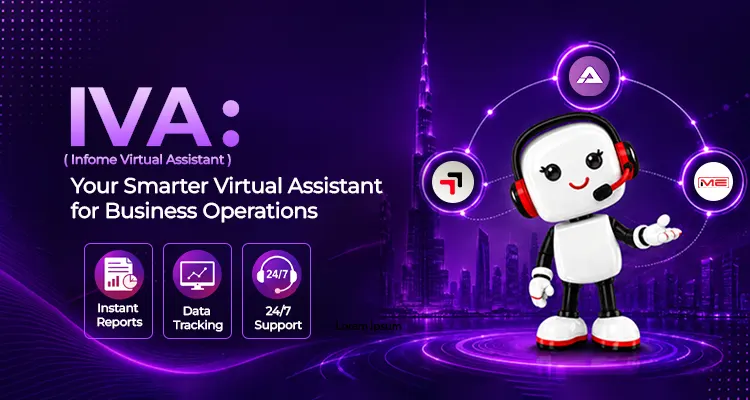
What Is IVA? Everything You Need to Know About Infome's Virtual Assistant
In 2026, UAE plans to shift 50% of its government services onto artificial intelligence (AI). Adopting an AI virtual assistant in your business operations can make daily workloads faster and help to improve workplace productivity. Moreover, introducing AI virtual assistant technology in UAE delivers instant support and enables employees to work more efficiently. Infome Technologies understands these needs and has introduced an AI assistant, Iva (Infome Virtual Assistant), across all Infome solutions. Iva assists users to complete tasks, generate reports, retrieve information, and automate everyday workflows smoothly.
Read Article

Infome: Right IT Solution Partner Offering Fast Delivery Across UAE, Middle East, and Africa
Businesses in UAE and other regions prioritize suppliers who can promise fast and accurate delivery to regions across UAE, Middle East, and Africa. Delivering IT products on time helps build the company's reputation, fosters customer trust, and ensures that company operations start on time in this highly competitive IT landscape.
Read Article
Need the Right Solution for Your Business?
Our experts will guide you to choose the best Infome that fits your needs and budget.
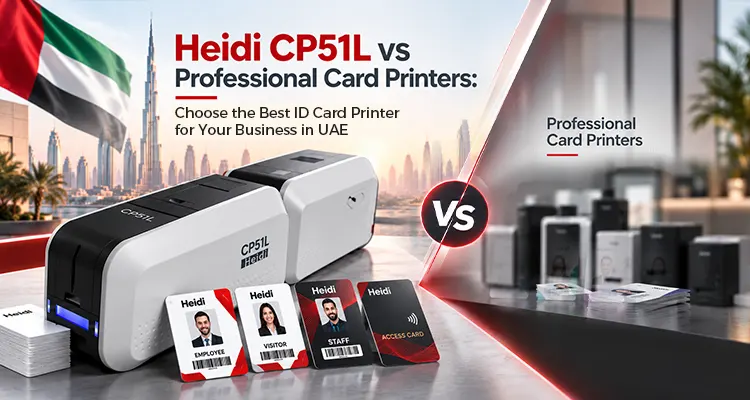
Heidi CP51L vs Professional Card Printers: Choose the Best ID Card Printer for Your Business in UAE
Businesses that issue employee, student, visitor, or access-control cards need more than good-looking prints. Card durability, lamination, security, encoding, printing speed, and long-term usability can all affect the right printer choice. The Heidi CP51L ID card printer combines card printing and integrated lamination, but how does it compare with other professional card printers?
Read Article
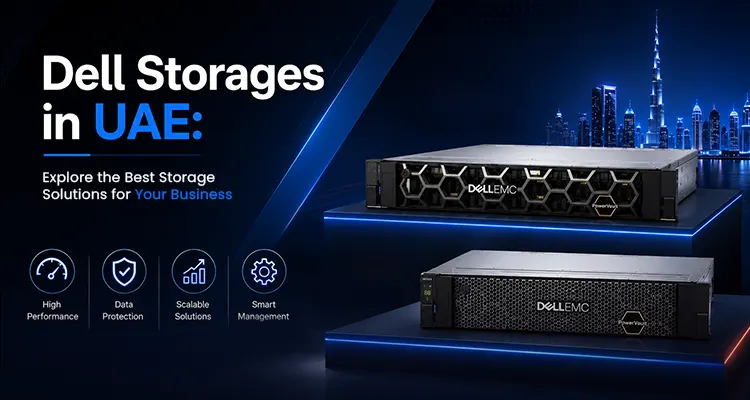
Dell Storages in UAE: Explore the Best Storage Solutions for Your Business
Dell storage is a hardware solution developed by Dell Technologies that helps you store, manage, and protect small to large organizational data.The Dell storage family includes PowerVault for small and medium-sized businesses and PowerStore for all-flash block and file storage. For highly demanding and critical workloads, PowerMax is a better option, and you can manage AI and data-intensive applications with Dell PowerScale storage. Dell PowerFlex is for shared block storage networks, Dell ObjectScale can handle advanced AI-related tasks, and PowerProtect is for data backup and recovery
Read Article
Honeywell to Brady: A New Chapter for Productivity Solutions in UAE
As part of a recent business transition, Brady Corporation has completed the acquisition of Honeywell’s Productivity Solutions and Services (PSS) business. Following the acquisition, the Honeywell PSS business will now operate as Brady Intelligent Productivity Solutions (IPS). Brady Corporation completed its acquisition of Honeywell's Productivity Solutions and Services (PSS) business on August 3, 2026, after initially announcing the agreement on April 20, 2026.
Read Article