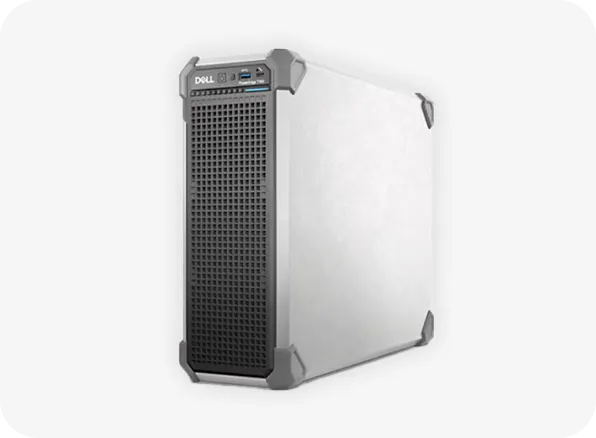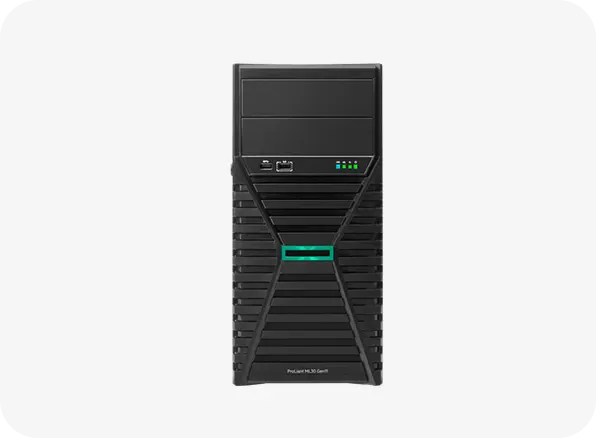
Quick Comparison of Dell PowerEdge T160 Tower Server vs HPE ProLiant ML30 Gen11 Server at a Glance
The server comparison table provides a quick overview of the key specifications and key features for Dell PowerEdge T160 Tower Server and HPE ProLiant ML30 Gen11 Server Let’s take a look at the comparison table below.
| Features | ||
|---|---|---|
| Server Type / Form Factor |
Type: Tower Server (compact tower chassis) Socket: Single socket, supports one Intel Xeon E-2400 Series or Intel Pentium processor |
4U Tower server designed for small businesses, remote offices, and branch deployments requiring enterprise-class capabilities in a compact, standalone chassis. |
| Processor (CPU) |
Supported CPUs: Up to one Intel Xeon E-2400 Series processor (up to 8 cores per CPU) Also supports: Intel Pentium G7400 / G7400T processors Max TDP: Up to 95 W per processor |
|
| Memory (RAM) |
Type: DDR5 ECC UDIMM only DIMM Slots: 4 total Max Capacity: Up to 128 GB using ECC UDIMM Speed: Up to 5600 MT/s |
|
| Storage |
Front Drive Bays: Up to 3 × 3.5 SATA HDDs or 2 × 2.5 SATA SSDs Alternate: Supports SATA HDD, SATA SSD, and optional NVMe boot drives Controllers: Software RAID S160, PERC H355 RAID controller, optional BOSS-N1 dual M.2 NVMe boot |
|
| Expansion / Connectivity |
PCIe Slots: Up to 3 PCIe Gen4 expansion slots Networking: Embedded dual 1 GbE LOM (Broadcom 5720) Optional: Supports 10 GbE network adapters and additional PCIe expansion cards |
|
| Redundancy & Reliability |
Power Supplies: 300 W or 500 W cabled PSU options Cooling: Integrated system cooling with optimized airflow Error Protection: ECC memory and RAID data protection support |
Built with enterprise-grade components and ECC memory support to ensure system stability, data integrity, and dependable operation for business workloads. |
| Operating System Support |
Microsoft Windows Server (with Hyper-V) Red Hat Enterprise Linux SUSE Linux Enterprise Server Ubuntu Server LTS |
Supports major server operating systems commonly deployed in SMB and enterprise environments (specific OS compatibility depends on configuration and HPE certification). |
| Security Features |
Cyber Resilient Architecture: Silicon-based root of trust, secure boot support System Security: TPM 2.0, signed firmware, and system lockdown features |
|
| Management & Monitoring |
Remote Management: iDRAC9 with Lifecycle Controller, dedicated iDRAC port Tools: Dell OpenManage Enterprise, OpenManage Mobile, Redfish API |
|
| Warranty & Support |
Standard Warranty: 3 Year Dell Warranty with ProSupport options Optional Upgrades: ProSupport Plus and extended enterprise support |
|