Features
Server Type / Form Factor
  • Type: Enterprise Rack Server


  • Form Factor: 1U Rack


  • Socket: Dual-socket (supports 1 or 2 Intel Xeon 6 processors)
1U Rack Server (high-density dual-socket)
Processor (CPU)
  • Processor Family: Intel Xeon 6 Scalable Processors


  • Max Sockets: 2


  • Cores per Socket: Up to 144 cores


  • Max Speed: Up to 4.0 GHz (varies by processor model)


  • Memory Channels: 8 channels per processor
2 × Intel Xeon 6 6700P/6500P/6700E Scalable Processors, up to 350 W TDP
Memory (RAM)
  • Memory Type: HPE DDR5 Smart Memory (RDIMM)


  • DIMM Slots: 32 DIMM slots (16 per processor, 2 DIMMs per channel)


  • Maximum Capacity: Up to 8 TB (with 256 GB modules)


  • Speed: Up to 6400 MT/s at 1DPC, 5200 MT/s at 2DPC (processor dependent)


  • Memory Protection: ECC, On-Die ECC, and advanced RAS features
32 × DDR5 DIMM slots; up to 6400 MT/s (DDR5) or 8000 MT/s (MRDIMMs)
Storage
  • Front Drive Options: Up to 10 SFF bays (SAS/SATA/NVMe)


  • EDSFF Options: Up to 20 EDSFF E3.S NVMe bays


  • Integrated Boot: Integrated OS boot device and OCP NICs in front cage


  • Max Internal Storage: Multi-hundred TB (depending on drive type and configuration)


  • RAID Support: HPE Smart Array controllers (RAID 0, 1, 5, 6, 10, 50, 60 – depending on controller)
Not detailed in available sources
Expansion / Connectivity
  • PCIe Slots: Up to 3 PCIe 5.0 x16 full-height, full-length slots


  • OCP Slots: 2 OCP 3.0 front slots for high-speed NICs or accelerators


  • Networking: OCP 3.0 FlexibleLOM (choices of 1/10/25/100GbE)


  • GPU Support: Up to three single-wide GPUs in rear
Not detailed in available sources
Redundancy & Reliability
  • Power: Redundant hot-plug power supplies (various wattages and efficiency grades)


  • Cooling: Redundant hot-plug fans; optional closed-loop or direct-liquid cooling options


  • Storage: Hot-swap drive bays and RAID-based redundancy


  • Availability: HPE-engineered reliability and enterprise-grade service-ready design
Not detailed in available sources
Operating System Support
  • Microsoft Windows Server


  • Red Hat Enterprise Linux (RHEL)


  • SUSE Linux Enterprise Server (SLES)


  • VMware ESXi


  • Canonical Ubuntu


  • Oracle Linux
Microsoft Windows Server, Red Hat Enterprise Linux, SUSE Linux Enterprise, Ubuntu, VMware ESXi, CentOS
Security Features
  • Silicon Root of Trust


  • Secure Boot & Secure Start


  • Intel TME (Total Memory Encryption)


  • Firmware and Runtime Integrity Monitoring


  • UEFI-managed encryption and privilege-separation controls


  • Compliance with ACPI 6.5, PCIe 5.0, PXE, and Wake-on-LAN
TPM 2.0, Secure boot, Chassis intrusion detection, BIOS and iBMC access protection
Management & Monitoring
  • HPE iLO 7: Embedded management for remote console, BIOS tuning, firmware updates, and alerts


  • HPE Compute Ops Management: AI-driven insights and lifecycle automation


  • APIs: RESTful / Redfish-based interfaces for third-party tools
iBMC with Redfish, SNMP, IPMI 2.0; FusionDirector; Remote KVM, BIOS recovery, firmware updates, log analysis
Warranty & Support
  • Standard Warranty: 3 Years Parts, 3 Years Labor, 3 Years Onsite (varies by region and contract)


  • Optional Support: HPE Pointnext, Foundation Care, Proactive Care, and custom SLAs
3-Year Manufacturer Warranty; Onsite installation and support by Infome Technologies

Key Features Comparison

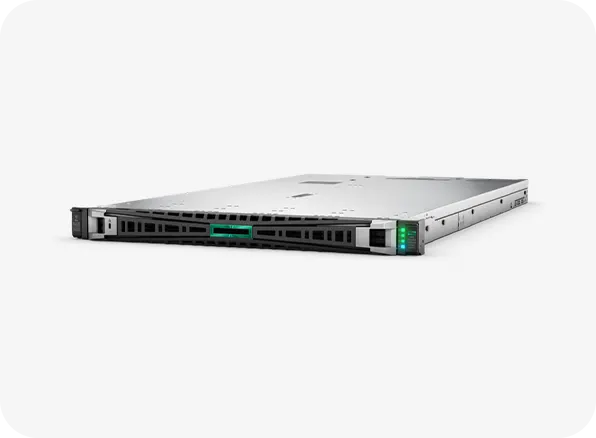
HPE ProLiant Compute DL360 Gen12

High-Performance Compute
Powered by the latest Intel Xeon 6 processors, the HPE ProLiant Compute DL360 Gen12 delivers up to 144 cores per processor and up to approximately 2× higher general compute performance versus previous generations, making it ideal for virtualization, databases, and AI-ready workloads.
Large, High-Speed Memory Capacity
Supports up to 8 TB of HPE DDR5 Smart Memory across 32 DIMM slots (16 per CPU), with speeds up to 6400 MT/s at 1 DIMM per channel, providing exceptional headroom for memory-intensive applications.
Flexible High-Speed Storage Options
Offers a compact 1U front-drive architecture with up to 10 SFF or 20 EDSFF E3.S NVMe drives, plus an OS boot device and OCP NICs in the front cage, giving flexible, high-speed storage for modern data centers.
Advanced PCIe 5.0 Expansion & GPU Support
Built on PCIe Gen5, the DL360 Gen12 provides up to three PCIe x16 Gen5 slots plus two OCP 3.0 slots, enabling high-bandwidth connectivity and support for up to three single-wide GPUs for AI, analytics, and edge-computing workloads.
Next-Generation Security & Firmware Protection
Equipped with HPE iLO 7 and Intel-based security features (including memory encryption and secure boot), the server delivers silicon-root-of-trust-based protections, secure configuration, and firmware integrity checks to safeguard data at boot, in-use, and at rest.
AI-Driven Management & Energy Efficiency
HPE iLO 7 provides a streamlined GUI, Redfish-based APIs, and AI-driven operational insights, while the platform offers three cooling options (air-cooling, closed-loop liquid cooling, and direct-liquid cooling) to balance performance and energy efficiency for sustainability-focused deployments.
Dual-Socket Intel Xeon 6 Power
Supports 2 Intel Xeon 6 processors with up to 144 cores and 350W TDP in a 1U form factor.
High-Speed DDR5 Memory
32 DIMM slots supporting DDR5 up to 6400 MT/s or MRDIMMs up to 8000 MT/s.
PCIe 5.0 Expansion
Includes hot-swappable OCP 3.0 NICs with PCIe Gen5 support for high-speed I/O.
AI-Driven Reliability
Features AI memory self-healing and PCIe fault diagnostics to reduce downtime.
Flexible RAID Storage
Supports RAID 0/1/5/6/10/50/60 with supercapacitor-backed cache protection.
Advanced iBMC Management
Integrated iBMC with Redfish, IPMI, HTML5 KVM, and optional FusionDirector support.

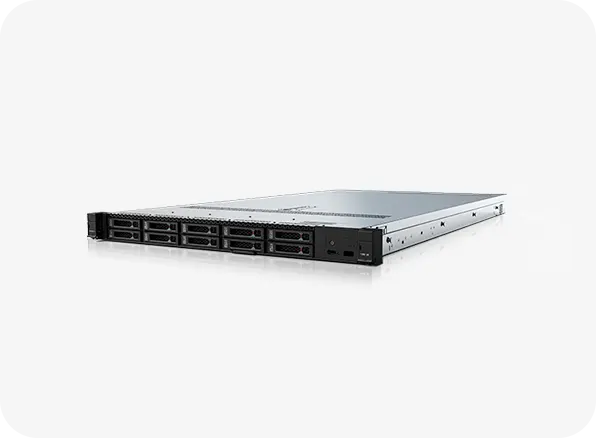
HPE ProLiant Compute DL360 Gen12 vs FusionServer 1288 V8 Rack Server : Which should I choose?

Choosing the right server is a critical decision for any business, and comparing HPE ProLiant Compute DL360 Gen12 and FusionServer 1288 V8 Rack Server gives you clear insights into which solution aligns best with your IT requirements. These servers are built for high performance, but they may differ in areas such as processor capacity, memory, storage, and scalability, making a side-by-side comparison easy.

This direct comparison helps you quickly identify the strengths and limitations of each server, which helps you determine which model best supports your workloads, applications, and long-term IT goals. By evaluating them together, you can make a smarter investment that ensures reliability and efficiency for your business.

Looking for more Servers Brand wise?

Discover the full range of

Still unsure which Servers is right for you?

Contact Infome for expert guidance.

Infome Expert Consultation